Education
How DevOps Improves Software Deployment Speed And Quality
Jan 13, 2026
Introduction
Software teams need to deliver faster and more secure software. Traditional deployment models slow this process because development and operations work in silos. DevOps solves this gap by combining culture, tools, and practices into a single workflow. DevOps focuses on automation, continuous feedback, and shared responsibility for better deployment speed. This improves software quality. DevOps does not rely on shortcuts. Rather, it focuses on discipline, automation, and visibility across the delivery pipeline. The Azure DevOps Certification Course is designed keeping in mind beginners who need to learn everything from scratch.
DevOps Improving Software Deployment Speed And Quality
Here’s how DevOps enhances software deployment speed and quality.
1. DevOps as a Deployment Accelerator
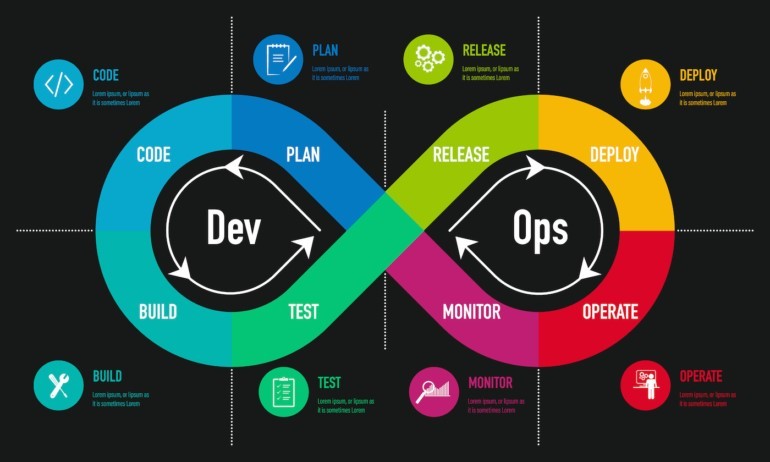
DevOps improves deployment speed by removing manual work and long approval chains. Automation replaces slow human-driven tasks. Teams deploy code through repeatable pipelines. Each change moves through build, test, and release stages without delay. This process reduces waiting time between development and production.
Continuous Integration plays a key role here. Developers push code changes frequently. The system validates every change automatically. Errors appear early instead of appearing during release.
Once the code reaches the repository, the pipeline triggers instantly. There is no manual intervention. This flow shortens release cycles from weeks to hours.
2. Continuous Integration Improves Code Stability
Continuous Integration tests code on every commit, which ultimately enhances quality. The system builds the application and runs automated tests. This practice detects bugs early. Early detection reduces fix time and cost.
The pipeline ensures that broken code never reaches later stages. Developers gain fast feedback. Teams fix issues before they grow.
Continuous Deployment Reduces Release Risk
Continuous Deployment automates the release process. The system deploys code to production after tests pass. This process removes risky big bang releases. Small changes reduce blast radius. Rollbacks become simple.
Continuous Deployment command deploys the latest version of the application. The same command runs in every environment. The app becomes more reliable with consistency. Predictable processes reduce deployment failures.
Infrastructure as Code Ensures Environment Consistency
Infrastructure as Code defines servers and networks using various code to remove configuration drift. DevOps teams create identical environments. Development and production behave the same way.
Terraform file creates infrastructure in minutes. Teams version infrastructure changes like application code. Rollbacks stay simple. Quality improves because environment-related bugs disappear.
5. Automated Testing Raises Software Quality
DevOps relies heavily on automated testing. Tests validate functionality, performance, and security. Automation ensures tests run every time. Manual testing cannot keep up with frequent releases.
The unit test runs on every pipeline execution. Developers trust the pipeline because tests enforce rules consistently. Quality improves because defects fail fast. DevOps Certification Course builds strong skills in continuous integration, continuous delivery, monitoring, and security for modern software teams.
6. Monitoring and Feedback Close the Quality Loop
DevOps improves quality through continuous monitoring. Professionals use monitoring tools to track system health. These tools enable teams to detect and fix issues faster with feedback.
Latency, error rates, and resource usage are indicated by Metrics. Logs and alerts help engineers identify root causes for better system stability and user experience.
7. Security Integration Protects Speed and Quality
DevOps integrates security into the pipeline. This practice is known as DevSecOps. Security scans run automatically. Teams catch vulnerabilities early without slowing delivery.
The command checks dependencies for known issues. Automated security ensures safe releases at high speed. An active security enhances the quality.
8. Collaboration Improves Deployment Outcomes
DevOps changes team behaviour for better deployment quality. Developers and operations share ownership, which enhances communication. Knowledge silos disappear. Faster decisions follow.
Team communication platforms can be connected with pipelined using ChatOps. Teams get updates instantly about alerts and deployment updates and respond to issues faster. This significantly increases deployment confidence.
9. Version Control Strengthens Traceability
DevOps uses strict version control for code and infrastructure, where each change remains traceable. Teams know who changed what and when. This transparency reduces errors.
Traceability improves audits and debugging. The changes stay accountable which enhances quality.
10. Scalable Architecture Supports Rapid Deployment
DevOps works best with scalable architectures. Microservices and containers isolate changes. Teams deploy services independently. Failures stay contained.
Dockerfile packages the app consistently. Containers run the same everywhere. Deployment speed increases because packaging stays fast and predictable.
DevOps Practice | Impact on Deployment Speed | Impact on Software Quality |
Continuous Integration | Reduces build and merge time | Detects bugs early |
Continuous Deployment | Enables fast and frequent releases | Lowers release failure risk |
Infrastructure as Code | Speeds up environment setup | Ensures environment consistency |
Automated Testing | Eliminates manual test delays | Improves code reliability |
Monitoring and Logging | Enables quick issue detection | Improves system stability |
Conclusion
DevOps uses automation, consistency, and feedback. This is necessary to improve software deployment speed and quality. Delays get removed with Continuous Integration and Deployment. Infrastructure as Code removes environment issues. Automated testing and monitoring catch problems early. Security integrates with delivery smoothly. Decision making and accountability gets better with team collaboration. The Devops Course with Placement offers ample hands-on training opportunities for the best career development. DevOps does not trade quality for speed. It achieves both together. Organizations that adopt DevOps release faster, fail less, and recover quickly. Such a balance makes DevOps an integral part of every development cycle.