Education
How Is DevOps Different From Azure DevOps?
Feb 24, 2026
Introduction
DevOps with Azure DevOps may appear to be the same thing at first glance. Both terms look similar. Both relate to software delivery. However, they differ strikingly. DevOps is a popular culture and practice model. Aspiring professionals can join DevOps Training to learn about automation tools, CI/CD pipelines, infrastructure management, etc. Azure DevOps, on the other hand, is a Microsoft product. Professionals working in this field must understand the differences between the two. This blog guides you through the major differences between DevOps and Azure DevOps. Keep reading this section to know more.
What Is DevOps?
DevOps is primarily a methodology. It combines development and operations together to drive efficiency. Automation, collaboration, and fast delivery are the pillars of DevOps. DevOps improves quality of software significantly. It reduces deployment risk.
DevOps uses principles such as:
· Continuous Integration
· Continuous Delivery
· Infrastructure as Code
· Monitoring and Feedback
· Automation at every stage
DevOps is tool agnostic. Professionals can use Jenkins, GitHub Actions, GitLab CI, AWS CodePipeline, etc. DevOps does not depend on one vendor. It is a mindset and workflow strategy. The entire Software Development Life Cycle—from planning to building and testing—is under the control of DevOps.
What Is Azure DevOps?
Azure DevOps is a cloud-based product from Microsoft. It uses tools that support DevOps methodologies. It is a platform rather than a methodology. One can join Azure DevOps Training to learn about Microsoft pipelines, repos, boards, release management , etc.
Azure DevOps includes five major services:
· Azure Repos
· Azure Pipelines
· Azure Boards
· Azure Test Plans
· Azure Artifacts
Azure Repos manages Git repositories. Azure Pipelines automates CI and CD workflows. Azure Boards tracks tasks and work items. Azure Test Plans manages manual and automated testing. Azure Artifacts manages packages and dependencies.
Azure DevOps supports YAML pipelines. Example:
This configuration triggers a pipeline when code changes in the main branch. It runs a build on a Linux agent. It executes a simple script. Azure DevOps integrates well with Microsoft Azure. It also works with AWS and Google Cloud.
Core Concept Difference
DevOps | Azure DevOps |
DevOps is a philosophy | Azure DevOps is a toolset |
DevOps defines “how” teams work | Azure DevOps defines “where” teams manage and automate tasks |
DevOps can exist without Azure DevOps | Azure DevOps cannot exist without DevOps principles |
DevOps encourages cultural change. It promotes shared responsibility | Azure DevOps provides dashboards and automation engines. |
Tool Flexibility
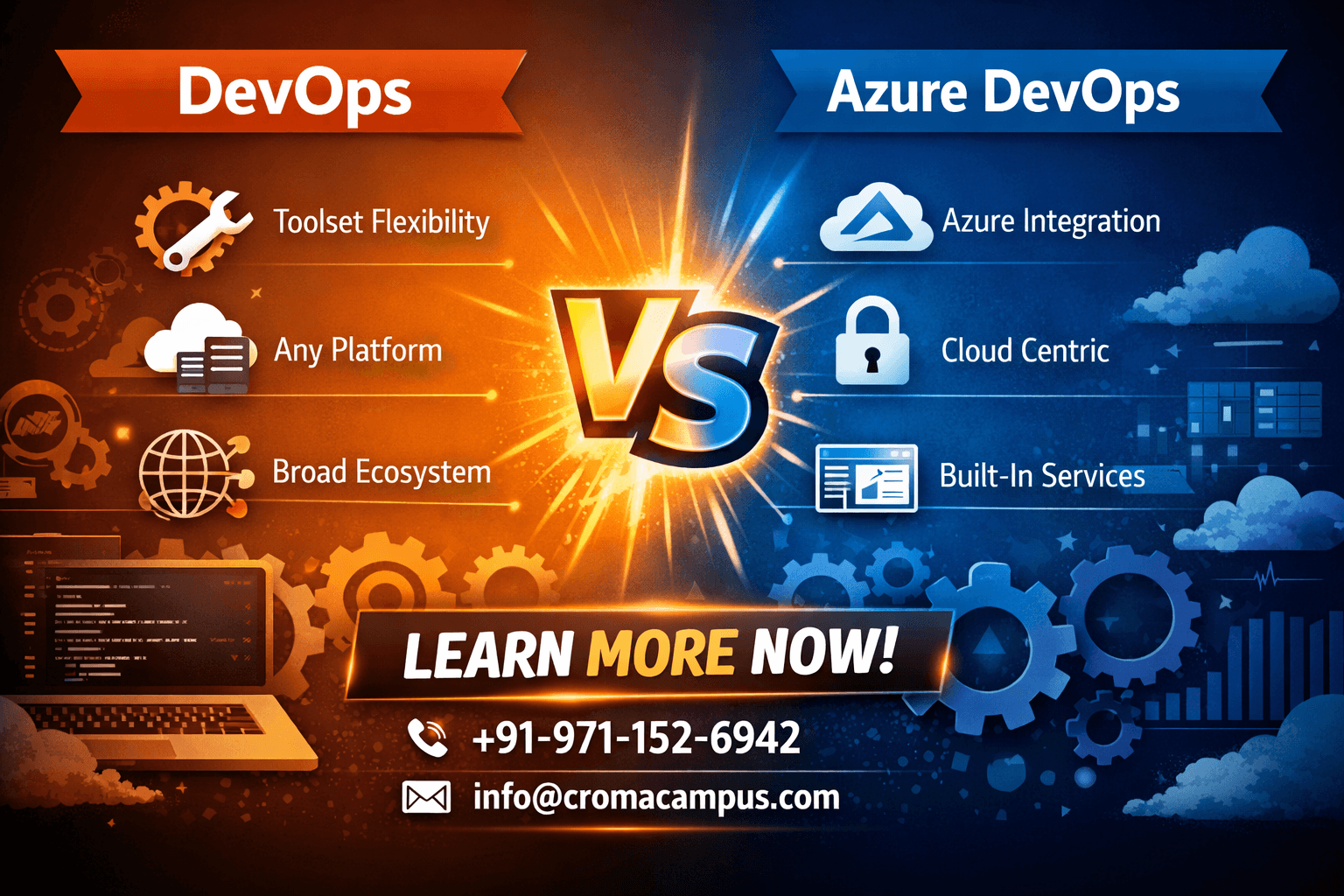
DevOps supports multi-cloud and hybrid tools. Teams choose tools based on project needs. For example:
· Jenkins for CI
· Docker for containerization
· Kubernetes for orchestration
· Terraform for infrastructure
Azure DevOps provides built-in alternatives. It reduces tool fragmentation. It centralizes project management. Organizations that use the Microsoft stack prefer Azure DevOps. Enterprises that use mixed technologies prefer flexible DevOps toolchains.
Vendor Dependency
DevOps | Azure DevOps |
DevOps is vendor-neutral | Azure DevOps is owned by Microsoft |
It works with any ecosystem | It integrates deeply with Azure Cloud |
It supports open-source platforms | It supports integration with third-party tools |
Career Perspective
Linux, CI/CD pipelines, containers, cloud platforms, monitoring tools, automation frameworks, etc. are important DevOps components. Therefore, professionals must be well-versed in using these tools. The DevOps Online Course offers the best learning facilities and guidance from industry experts.
Azure DevOps engineers need to work with Azure services, Azure Pipelines, ARM templates, Azure Repos, Azure security models, etc. Microsoft ecosystem must be the priority for these professionals.
Both roles require automation knowledge. Both roles require CI/CD expertise. The difference lies in tool specialization.
Technical Architecture View
DevOps architecture includes:
· Source Control System
· Build Server
· Artifact Repository
· Deployment Engine
· Monitoring Stack
Azure DevOps bundles most of these components in one platform. It reduces integration complexity. It simplifies governance. It provides centralized access control through Azure Active Directory.
A Table Of The Key Differences Between DevOps and Azure DevOps
Feature | DevOps | Azure DevOps |
Nature | Methodology | Microsoft Tool Suite |
Vendor Dependency | Vendor Neutral | Microsoft Based |
Scope | Cultural and Technical Practice | Platform Implementation |
Tool Choice | Flexible and Open | Integrated Microsoft Services |
Focus | Process Improvement | Process Automation |
Conclusion
DevOps is a culture-driven approach that improves speed and reliability in software delivery. Azure DevOps, on the other hand, is a Microsoft platform. It relies on integrated services to support DevOps practices. DevOps is all about principles and workflows. Azure DevOps heavily uses Microsoft tools and automation for DevOps practices. Professionals are suggested to begin with DevOps fundamentals for more flexibility. The Devops Master Course adopts every industry-relevant trend to provide the right guidance. However, for professionals working with Microsoft, learning Azure DevOps may be beneficial.